PSD Letters for Task-Trained Dogs
Some dogs don't just comfort you — they work for you. They stop panic attacks, wake you from nightmares, or remind you to take medication. The law calls that a psychiatric service dog, and the rights are bigger.
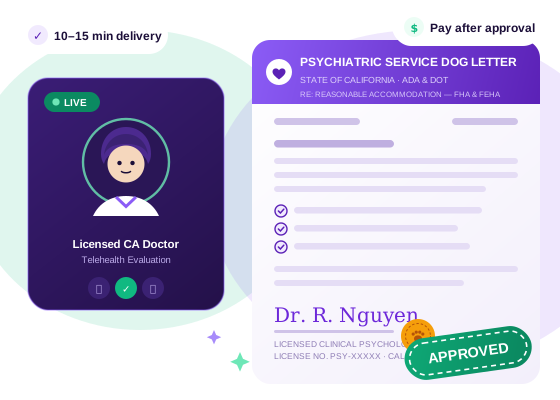
ESA vs. PSD: the one difference that changes everything
An emotional support animal helps just by being there. A psychiatric service dog is trained to do specific jobs for a psychiatric disability — deep-pressure therapy during a panic attack, creating space in a crowd, fetching medication. That training is why the ADA gives PSDs full public access, while ESA rights stop at housing.
| Psychiatric Service Dog | Emotional Support Animal | |
|---|---|---|
| Main requirement | Trained tasks for a disability | Helpful presence — no tasks needed |
| Which animals | Dogs (rarely miniature horses) | Most companion animals |
| Stores, buses, restaurants | Yes — ADA access | No general access |
| Airplane cabin | Free, with DOT forms | Normal pet rules apply |
| Rental housing | Protected (FHA/FEHA) | Protected (FHA/FEHA) |
Could you qualify?
PSDs help people whose psychiatric conditions — PTSD, severe panic or anxiety, major depression, bipolar disorder, and others — seriously limit daily life, when a trained dog's tasks truly help. Our doctors check both parts honestly: your clinical need, and whether a task-trained dog is the right tool.
What comes with your PSD letter
- A licensed California doctor's confirmation that you need a psychiatric service dog
- License type, number, and state printed on the letter
- Paperwork that works for housing requests and DOT air-travel forms
- Free verification support if a landlord or airline calls
How to start
Book a private video visit any day, 7 am to 11 pm. If a PSD fits your situation, your letter arrives within 10–15 minutes of approval — $149 for up to 2 dogs, $229 for up to 3, charged only after approval. Full details on the prices page.